A 2026 guide to open-source ELT tools across extract-load and transform: Airbyte, dlt, ingestr, Sling, Meltano, dbt, SQLMesh, and Bruin. Which cover the whole ELT flow, which do one step, and how to assemble a stack you can actually maintain.
Kateryna Kozachenko
Marketing & Growth
TL;DR: The best open-source ELT tools in 2026 split by which part of ELT they own. For extract-load: Airbyte, dlt, ingestr, Sling, and Meltano. For transform: dbt and SQLMesh. For the whole ELT flow in one open-source tool: Bruin, which runs ingestion (via ingestr), SQL and Python transformation, quality checks, and scheduling together. Pick a single-step tool if you already have the other steps covered, and a platform if you are assembling a stack from scratch and do not want to maintain four systems.
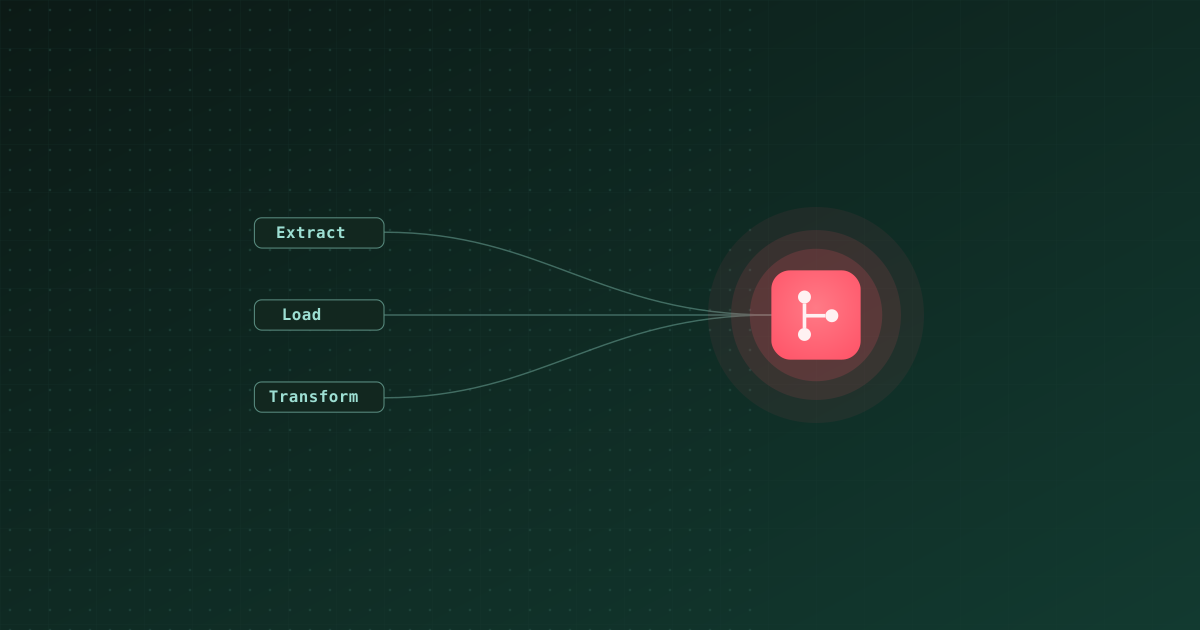
ELT stands for Extract, Load, Transform: pull raw data from sources, load it into a warehouse, then transform it in place using the warehouse's compute. It replaced the older ETL pattern because warehouses got cheap and powerful enough to do the transformation step themselves. "Open-source ELT tools" is a slightly ambiguous phrase, because most tools only own one or two of those three letters. This guide is organized around that, so you can see exactly what each one does and where the gaps are.
The pattern to notice: most open-source ELT tools are single-purpose. That is fine, and often better, if you already have the other steps solved. It becomes a problem when you are starting fresh and end up gluing an extract-load tool to a transform tool to a scheduler, with three config formats and three places for a pipeline to break.
The broadest open-source connector catalog. If your requirement is "connect to this long tail of SaaS sources," Airbyte is the default. You self-host a server (or pay for Cloud), configure connectors through a UI, and load into your warehouse. Strong on breadth, heavier operationally, and UI-first rather than code-first, which some engineering teams dislike for version control and review.
A Python library for building pipelines in code. If your team lives in Python and wants ingestion as importable, testable functions with schema inference and incremental support, dlt is excellent. You write the pipeline, which means more control and more code to own.
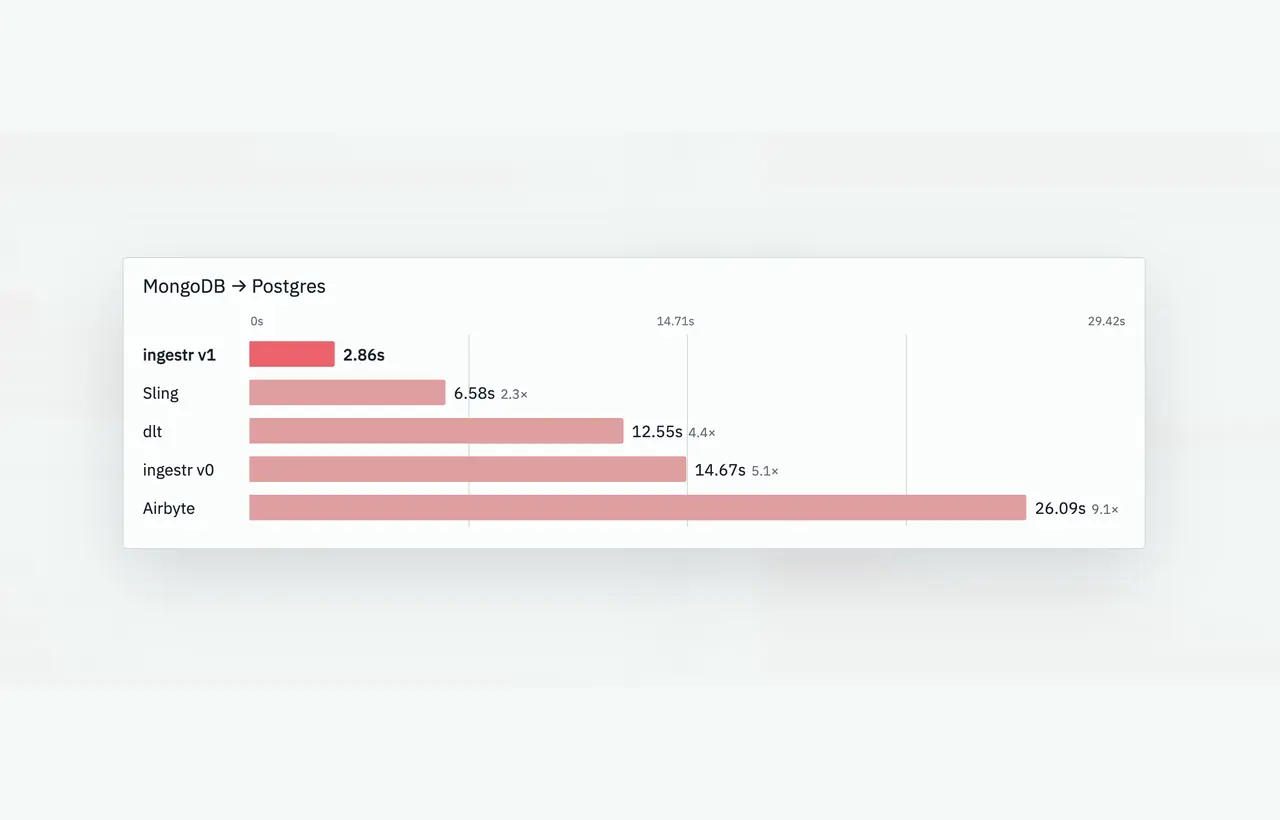
We build ingestr: an open-source CLI that moves data from a source URI to a destination URI with one command, no server, and native bulk-load into warehouses. It is the fastest path from credentials to data landing for the common database and SaaS sources. Code-first and CI-friendly, without writing a custom pipeline for each source.
A Go CLI focused on fast database-to-database and file transfers, configured with simple YAML. Great throughput on the paths it targets; connector breadth is narrower than Airbyte.
An orchestrator for the Singer tap/target ecosystem. Its value is reusing the many existing Singer connectors and wiring in dbt for transformation. It inherits the Singer ecosystem's inconsistency in connector quality, but it is a genuinely open, code-first option.
The tool that made ELT-style transformation mainstream. You write SQL models, dbt handles dependencies, materialization, tests, and documentation. It is the default transformation layer for a huge number of stacks. It only does transformation, so you still need an extract-load tool and a scheduler around it.
A newer transformation framework with column-level lineage, virtual data environments, and change-impact analysis built in. It competes with dbt on the transform step and adds stronger dev-workflow features. Like dbt, it is transform-only.
If you are assembling a stack from nothing, the four-tool route (extract-load + transform + quality + scheduler) means four things to install, learn, version, and keep in sync. Bruin is an open-source data platform that does the whole ELT flow in one place: ingestion through ingestr, transformation in SQL and Python, data quality checks, and scheduling with lineage. One project, one config surface, one place a pipeline is defined.
That does not make Bruin the right answer for everyone. If you already run dbt happily and just need ingestion, add ingestr or Airbyte and keep dbt. If you have a mature Airflow setup, you do not need Bruin's scheduler. The platform wins specifically when the cost of integration and maintenance across separate tools is the thing hurting you, which is common on small teams where nobody owns "the plumbing" full time.
Already have transformation (dbt/SQLMesh) and a scheduler? Add an extract-load tool: ingestr or Airbyte, depending on whether you want a fast CLI or maximum connector breadth.
Already have ingestion and scheduling? Add dbt or SQLMesh for transformation.
Starting from scratch, small team, want minimal moving parts? Use a single platform (Bruin) so you are not maintaining four tools.
Large team with strong platform engineering? Best-of-breed separate tools is defensible; you have the people to maintain the seams.
I work at Bruin, which makes ingestr and Bruin, so weigh this accordingly. It is meant to be a fair map of the open-source ELT landscape, not a sales pitch. Corrections welcome at support@getbruin.com.